Sunday, April 4, 2010

How you know you live 4 degress North of the Equator


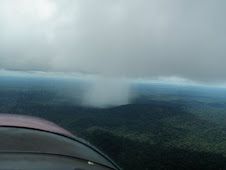
I have always been a guy who loves weather and topics on the subject have and continue to fascinate me. Both my Grandfathers were farmers and from my experience being around them, understand how and why climate and other weather-related phenomena sparked their interest. I guess it’s in my blood. When journaling, I’ll often document the weather for the particular day. So after well over a year and especially after experiencing 12 full months in the jungle I thought I’d give a few of my observations pertaining to the statement: How you know you live 4 degrees North of the Equator.

Here are a few…

1) The words ice, snow, shiver and season do not exist in your people group’s language.

2.) Any given day could by any other given day of the year. (The temps vary so slightly that a season concept is non-existent.

3.) The sun is always intense and always hot even when the temps aren’t.

4.) You can get sun burned in <10 minutes.

5.) You have to search far and wide to find sunscreen in your country’s capital city.

6.) You have never worn the only sweatshirt you brought from home.

7.) The temps have never dipped below 67 degrees.

8.) You woke up freezing cold and checked the thermometer to see the display show 72 degrees Fahrenheit.

9.) You hung your black shirt out on the line in the morning and pulled a fully dry brown one in the afternoon.

10.) Your clothes will decay at an alarming rate.

11.) You never assume or have confidence that it won’t rain.

12.) Fully cleared grass and other plant growth can be over 6 feet high in a matter of a month or so.

13.) People are shocked that a time of year exists where you live in which it is so cold you cannot swim or wash in the rivers.

14.) Intervals of rain are consistent enough that for 80% of the year water caught from the sky is sufficient for all needs.

15.) You’re always sweating and as a consequence, you’re always washing clothes -and you don’t even think of wearing yesterday’s shirt today. lol
16.) You are always perspiring and have broken into a sweat at any and all of the 24 hours in a day.

17.) The season concept is painstakingly difficult for your people group to understand.

18.) If you cook it today, you better eat it before today ends.

19.) Ants: unfathomable both in number and variety. Every one of them is armed to the teeth.

20.) You’ve never had a need for chapstick or any type of lotion.

I could go on for a while but I felt twenty reasons would suffice to give you a little idea climate-wise from a 15 month veteran jungle man.

A few questions with Basiya Otmar

On a cool and sparsely-clouded February morning I had an awesome opportunity to sit down and talk with a local village leader and acquaintance named Basiya Otmar. Otmar, whose wife is Saa Bea (read “Saa Bea’s story”) has a family, in which a number are believers and so he has ostensibly heard the message of the Gospel. As I sat down and watched him build a thatched hut in his large garden there ensued a deep and insightful dialogue on marriage, the Bible and Aukaan culture. I made an effort to remember as much as I could of what was said between us. What was discussed helped me better understand the average Aukaaner’s perspective worldview.

Otmar: Ryan, there was a guy a while back who told me a lot about the Bible and read the stories and I’m telling you that I would become a Christian if it wasn’t for the fact that believers have a problem with a man having more than one wife. Why is God opposed to that?

Me: Well…there are plenty of reasons why: For starters, in the beginning God made Adam and Eve, male and female, Jesus reinforced that as being the way God intended it to be from the beginning.

I then went into how men had or chose to take more than one wife including some of the Holy men of God in the Old Testament but you see the magnitude of strife it brought on them.

Otmar: Yeah, yeah I understand that. It’s not an easy thing to manage. It takes skill and a wise man who knows what he’s doing. But let me tell you something, I was one of 21 kids by my father and five of his wives but I was the only child of my mother. If my dad had only had one wife, he would have only had one child! Look what a problem we have on our hands then.

This evaluation of this phenomena by Otmar and his perception that having only one child in a family was a serious problem put into perspective how truly different the views of family and child rearing are in Aukaan culture. I had to laugh considering Otmar himself has nine children by his only wife. I wanted to tell him how there are plenty of women who bear enough children to make up for cases such as his own mother.

Me: Otmar you know quite well how every woman is jealous of any other woman with whom she must share her man. You also know you can’t love each one the same.

This question was initiated by his bringing to my attention the case of one particular man in Godoloho who has four wives and lives harmoniously with all four. He told me they all go to the planting grounds together and each will cook a particular dish and bring it to him without quarreling. (I later found out from another source that one of the wives had left him so clearly there were a few false assertions concerning his situation)

Otmar: True! You can’t love all of them the same, no doubt about that. But that’s where you find out how who has the smarts, wisdom or shrewdness to make everything work well. You must deceive each one of them so they each feel that you love them the most. Each one must believe they are your favorite.

Me: Yeah, but I find it hard to believe you can successfully carry that out. It will become quickly apparent who is more favored by the way you treat each one.

Me: Otmar, what about adultery and mistresses by so many men here? I know because men tell me all the time how they sleep with women besides their wives. I also know how they expect complete faithfulness to their husbands in that regard. Is this so?

Otmar: Absolutely. That’s how it works and those are the expectations.

Me: Don’t you see how there is a double standard here? You know the majority of these women with whom men are unfaithful are married to a man somewhere and someone’s wife is being unfaithful when men do what they please.

Otmar: hmmm. Yeah. (There was a sort of confident indifference to my observation- his acknowledging the discrepancy but knowing change wasn’t anywhere in the future nor was any effort going to be put forth by a reality so advantageous to himself)

Me: Otmar, You yourself have only one wife and a good one at that (his wife is Saa Bea, a strong believer, see “Saa Bea’s story” –one of my earlier posts) and you’re a valiant defender of polygamy so why don’t you take another wife yourself?

Otmar: Well..I have nine kids and providing for another woman and additional kids would be tough right now.

You can see how lame his own defense in relation to his antecedents for support of polygamy was. He didn’t use any arguments such as status, masculine dominance, or pleasure. I later talked to another Christian woman from church who told me quite plainly that Saa Bea wouldn’t take it. She’d leave him and/or fight with the rival. Truthfully, Otmar knows how a good, faithful wife is not a given and Saa is just that. He benefits from her Christian morality and belief in being faithful to one man despite his own unbelief.

This discussion was too good and it was the proper time to bring up how Saa Bea had been miraculously healed with the whole village being a witness to it including himself. Saa Bea had told me how Otmar acknowledged a miracle but still didn’t accept Jesus but I wanted to here from his own mouth his take on it. His response was what I expected but all the while so powerful and gave a clear glimpse into the hearts and minds of so many Aukaaners regarding the Gospel.

Otmar: Yeah Ryan, Bea was sick and paralyzed for two years and she was in fact, healed instantly. “They” (numerous villagers) refused to believe it really happened but it did.

Me: So it was a miracle then?

Otmar: Yeah.

Me: So Otmar you know how your wife continually refused help from the witch doctor and she called on Jesus’ to heal her despite everyone else rebuking and cursing her for doing so. You see how Christ’s power was what did it.

You have see with your own eyes how the God we worship has amazing power and might so the only question I have for you is this: Why don’t you become a Christian?

Otmar: Well…Ryan, you see our people brought these set of beliefs from Africa, they stayed with them as they were on plantations as slaves and they carried them as they came up the river to where we are today.


Otmar’s response was simply stated and surprisingly brief. It didn’t explain details and expound on the sanctity or effectiveness of the Aukaaner’s religious practices over others’. However, Otmar’s shockingly succinct response told abundantly more than the few words he spoke. What it said was: I don’t need any justification for why I or my people group believes what they believe. I hold fast to these beliefs because that’s how we’ve always done it and I’m not turning my back on that despite evidence of truth outside of it-even within my own family. Otmar’s “testimony” is representative of many Aukaaners in the interior and it gives a small glimpse into the hearts of the lost in Suriname. But praise be to Jesus Christ our savior for those who see God’s power, do believe and ‘produce a crop 30, 60 and even 100 times what was sown’
Friday, January 1, 2010

A blog of thanksgiving for the New Year


In the remarkable and emotionally-stirring story of the Rich young man in Mark 10, a story that left the Twelve disciples in vexed wonder; a story in which the young man who fell on his knees before Jesus genuinely desiring to know how to find eternal life, and one in which it isn’t difficult to see ourselves in place of that man, Peter said to Jesus, “we have left everything to follow you!” And to this Jesus replied, “no one who has left home or brothers or sisters or mothers or fathers or children or fields for me and the gospel will fail to receive a hundred times as much in this present age (homes, brothers, sisters, mothers, children and fields- and with them, persecutions) and in the age to come, eternal life.” We all read the same gospel stories and there are those universal lessons which we all understand. But there also exists some aspects of a story: a certain phrase, a moment or reaction, a particular word that may mean more to us at a specific time in our life.

I’m confident most who read this passage see the splendid promise at the end: eternal life. It is undoubtedly the paramount promise given to us by Christ, the ultimate reward for all believers. But what precedes this promise is another, one for our life here on Earth. Jesus says we will receive a hundred times as much in this present age (homes, brothers, sisters, mothers children and fields…). So as 2009 comes to a close and it marks my one-year anniversary since arriving in Suriname, I have found it the proper time to share with you from my heart about how the Lord has blessed me with “a hundred times as much in this present age”, notably, my Suriname family.

I have put much thought into writing this blog for a while because the gratitude and thankfulness has long been on my heart and mind. My supervisors (out of respect for their position of authority but not in any way an appropriate description of the relationship which is undoubtedly family-like) are absolutely awesome. They have been a blessing to Taylor and I from the very moment we met Charles a year ago on a sultry January morning in Paramaribo and Brittany five months later at our annual prayer retreat. Their three kids: Ethan, Caleb and Abigail have blessed the two “uncles” as we were given the endearing designation after we had known them no more than two days. I am thankful to God for them and all they have done for me.

When committing to be overseas in a foreign country for two years, who will be your supervisor is of critical importance to how your term will pan-out. I could write pages of all the exploits and outright adventures we’ve been through as well as awesome experiences with sharing Christ with the Aukaan people alongside Charles. But what I want to get across is how Charles has exhibited the highest virtue attained by a great leader: leading by example. I cannot recall anything he has asked us to do that he himself hasn’t done. We’ve storied together with our people group, we’ve told testimonies on the radio. He’s handed us the microphone on live radio and asked us to tell a Bible story extemporaneously. We’ve hauled a boat up a seemingly impassable rapid and camped out countless nights in the jungle with all the bumps, bruises, sore feet, oppressive heat and occasional plague-like swarms of insects. We have seen him with Brittany and the kids in the home and seen what and how Biblical, Christ-like marriage and fatherhood look like. In the interior, Charles is highly respected among the Aukaaners and our direct association with him has benefited the ministry in Ditabikii and Godoloho. Charles has challenged us in so many ways in our present lives as well as the near and far future. One day as we were doing a morning devotion Charles posed the question as to how did David’s mighty men slay giants. We pondered this for a few moments until Charles answered us saying that David himself had slain a giant. This lesson being that leadership is of upmost importance and that men will only summon the amount of courage and inspiration that their leaders are willing to display.

Brittany has been an incredible blessing to Taylor and I. She has shown an uncommon level of hospitality and thoughtfulness both in the city and the interior. While in the interior she frequently sends us out care packages with treats we love and new snacks we haven’t yet tried. In the city, we are treated to delicious homemade meals with their family. This has brought us to the obvious conclusion regarding our preferred cuisine in the city: the Shirey’s house.:) Even while in the interior Brittany would call us to see how we were doing, if we needed anything sent and for prayer specific prayer requests. She would often give us a verse she felt the Lord wanted us to hear. All this makes us feel every bit a part of the family. It makes being overseas feel surprisingly far from foreign.

Sharing about our ministry, sitting around the table both in the city and the interior has furthered my belief and gratitude that Jesus promise of a hundred times as much in this present age has been and is being fulfilled in my life. And for this I am thankful.

Monday, November 30, 2009

Manly man's work

In the humorous song “I’m still a guy” by Brad Paisley the country artist sings the following line: “these days there’s dudes getting facials, manicured, waxed and botoxed with deep spray-on tans and creamy lotion-y hands that can’t grip a tackle box…” Well this might be the case with some of my misguided American brethren but there is a little place just down south where they haven’t heard of such beautifying enhancements. Here in busy kinder (bush country) my bar soap was a novelty and the object of wonder…and that was with the Aukaan women! Sand just doesn’t have the same refreshing scent as my verdant bar of Irish Spring. So needless to say people out here are tough…and therefore work is tough.

I consider myself an outdoorsman and a country boy of sorts. It wasn’t incidental that I arrived in this place doing this particular work in this jungle environment. And I have loved every minute of it. Since arriving in Godolphin a month ago, I had become acquainted with the village but hadn’t ventured to do anything too risky or adventurous. With a foreigner, Awakeners exercise an understandable degree of caution. You’re under their care and your well-being is their responsibility. They want to see what you can handle. You quickly learn why because there isn’t room for blunders when you’re deep in the bush and mistakes can very well cost you your life. After three weeks I was anxious to get out and do something outside Godolphin itself. I was chomping-at-the-bit to get after it.

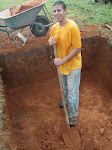
So around the last week of September every family in Godolphin began the annual task of clearing a section of land to plant for next year’s crops. Baa’ Pikin Lodie gave me the go and so two days were spent cutting all the underbrush of a two to three acre plot of virgin jungle. With machete in hand we hacked and hacked…and hacked all day long. The jungle vines and brambles are which make the jungle so dense were the objects of our wrath. All the while carefully looking for hidden wasp nests and deadly snakes. It was work, no doubt and at the end of day 1 our hands were sore and bleeding. But as tough as this sounds, women in the village do it along side the men. Saa’ Olie, Baa’ Pikin Lodie’s wife worked with us the whole day. But this wasn’t the end to clearing the plot. A weekend to rest and then we go back to Faa goon: Fell all the trees on the plot. It’s what Aukaaners call man nengee wooko (“man’s work” or for a better definition and understanding, “manly man’s work”).

So Monday arrives and we load up all our gear and head to the planting ground (goon). There’s a clear and apparent disconnect that comes with two people who speak a different language. I could tell Baa’ Pikin Lodie wasn’t sure if I had worked with an axe before. I know he was going to be cutting with the chain saw and although I knew how to use one too I didn’t ask, besides I love workout you get cutting with an axe. When I told him I’d used an axe plenty of times helping my Grandparents cut firewood and didn’t try to push using the chainsaw there was an immediate relief on and reassurance on his face. Why would there be any apprehensions in the first place? I soon discovered why.

Before we put the axe to the tree, Baa’ Pikin Lodie prayed in earnest to the Lord for safety while we worked. It was really neat that he saw that as being of paramount importance and we wouldn’t dare venture to begin without asking God’s hand to be upon us. So I began to hack away. I love cutting with an axe. And when you fell a big tree after strenuous effort there is a unique sense of satisfaction – a victorious feeling. Well there are also dangers (big surprise) when Faa’ing a goon. The tricky part of the work stems from the vines interwined in as many as a dozen trees. You cut one expecting it to fall and it just hangs or won’t move. You look up and see it being held by a vine connected to another (usually bigger) tree. So you cut every tree in that area and yet none have come down. You carefully observe to spot which one is keeping them all from falling. So you eventually cut the winner and in an instant all the trees come down with a swift and violent crash. Toward the end of day two with a small section of the plot left uncut in which about 10 relatively large trees had all been hacked but were being held up by one. Baa’ Pikin Lodie had a necessary planned route of escape since the tree was situated right smack in the middle of where all the trees were going to fall. He cut until we heard the first (and only) telltale sign: a faint crackling of the trunk. So Lodie began a dash towards safety. The scene was like something from a movie because he barely escaped, the trees were so near to hitting him I couldn’t help but see Indiana Jones and the huge boulder in Raiders of the Lost Ark. And like Indy, he came out unscathed. There were many close calls but that’s what is to be expected when you’re doing man nengee wooko. So after two exhausting long days with sore hands and scraped and scratched legs (I for some unknown reason did not find it necessary to bring pants and I paid for it dearly) we were finished. At prayer time with believers we had plenty of reasons to give God praise. Many Aukaaners had gotten serious injuries and just a month or so previous several men had died from accidents.

When people in the village found out that I had Faa’d a goon they were impressed and laughed because this work is about as “Aukaan” as you can get. Doing it helped me understand and discover a newfound respect for the hard life they live to provide food for their families. When telling men here the story of the Fall of Man there is always a clear understanding and acceptance when God tells Adam: “cursed is the ground because of you; through painful toil you will eat of it all the days of your life” and “by the sweat of your brow you will eat your food until you return to the ground”.

Sunday, November 29, 2009

Once in a lifetime experience

So often you hear the phrase “once-in-a-lifetime experience”. There are countless places and a diverse and extensive list of things people do that fit in the category. But anything, if done only once, is by definition a once is a lifetime experience. I was privileged to experience an event that will probably be a once-in a lifetime experience for myself and one which I doubt few, if any person outside of the interior jungle of Suriname will ever see. I got witness and be a part of what is known as Ponsu. An odd word it is, with no particular resemblance to any commonly used English word. How it is performed and the results are just as unique.

In the jungle there exists a certain plant which Aukaaners call “Neko”. It looks just like any piece of wood or medium-sized vine you see everyday but it possesses a striking potency when it is prepared and used in a particular manner. So the vine is sought and brought to a place upstream from the village, it is mashed and pulverized with hewn-out wooden clubs awaiting its fate: being washed in the Tapanhoni river. And what Neko does is a splendid and puzzling thing: as the Aukaaners say, “a meke den fisi dunguu”. Translation: It makes the fish drunk. Okay, so I’m gonna go out on a limb here and presume that you haven’t been around drunken fish. Well…..I’d take an intoxicated fish over a sober one any day…and not because they’re a lot more fun to be around. I know it sounds like I’m pulling your leg and you’re probably thinking a year in the bush is beginning to have adverse effects on my mind. But believe me, when I heard how this thing works I was just as incredulous. So when I witnessed Ponsu I made sure to take video and photographic evidence.

So what does a drunk fish do and why does every soul in the whole village come to take part in it? If you know the jungle you know every form of protein: fish, meat, fowl is diligently sought for consumption. When you find an effective method to acquire it you ride that wave. Physiologically, a “drunken” fish is simply one deprived of oxygen. And what is causing the water the fish is living in to be deprived of this precious oxygen? You got it: Neko. And so that’s how Ponsu works. The Neko has some chemical property that deprives the river water downstream from where it is washed of Oxygen. As I witnessed, a little Neko was effective for more than 10 kilometers downstream for a river at some spots is over 600 Meters across.

Well the fish behave well…like drunks. They are disoriented and sluggish. They float to the top of the water, flop around, sink back down, languidly swim in circles. And they are easy targets for an entire village (including myself) armed with spears. The village Ponsu’s the river once annually. So with a chance for an abundant catch of fish no one misses out. Even a rookie like myself speared at least four. It was a blast. We’re going into rapids and there are countless boats. It was like a roller coaster ride. I couldn’t believe I was really doing this. The implements were maybe six feet long and most were handmade of wood with a sharp tip. Needless to say, people we’re surprised to see a white guy (one who just arrived two weeks previously) out there.

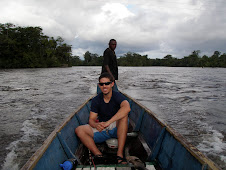
The whole thing began on a Tuesday afternoon and ended Wednesday around 11 A.M. We camped on the river Tuesday night and got up around 4 A.M. and as the sun began to rise, a few men began to wash the Neko in the river. Behind these men lay a sea of boats and entire families waiting in visible anticipation. It was a race as I came to realize. After the washing was complete, someone shouted “Go!” and everyone began to rush downriver, maneuvering and dodging fellow boats; all while spearing fish they could find. We found one spot in the river and waited as all sorts of fish of every shape and size floated by from the tiniest guppy to six-pound peacock bass. I was in one boat with two seasoned veterans, Baa’ Bodi and Baa’ Yunkuman. When you saw a big one the excitement level jumped. The spotter pointed and if (when) someone missed, we all tried to take our shots as the fish would dip down and we looked intently to predict where it would pop back up. After about four hours it was complete. Everyone went home with a hearty portion of fish, much of which will not be eaten within a day or two. The rest is smoked, salted or dried for preservation. So this fleeting rush of fun has now come to a close but as for the once in a lifetime deal….well I’m here till October 2010 so there’s a high probability there will have to be a word replacement with the insertion twice -in a lifetime experience.

Fear

With more than likely little knowledge of the interior of Suriname, what do you the reader imagine as being the two most commonly asked questions of me by Aukaaners? Think hard. There are no shortage of questions in the world. Before living here I would have never even known where to start so don’t beat yourself up for not knowing. Well, the two most common questions asked are these: You’re how old?...24! Why aren’t you married? and the second, “You aren’t afraid of (fill in the blank)? The former of these two…well, I’ll save that for another time…as in personal conversation, you probably don’t want to read a blog that long. Lol.

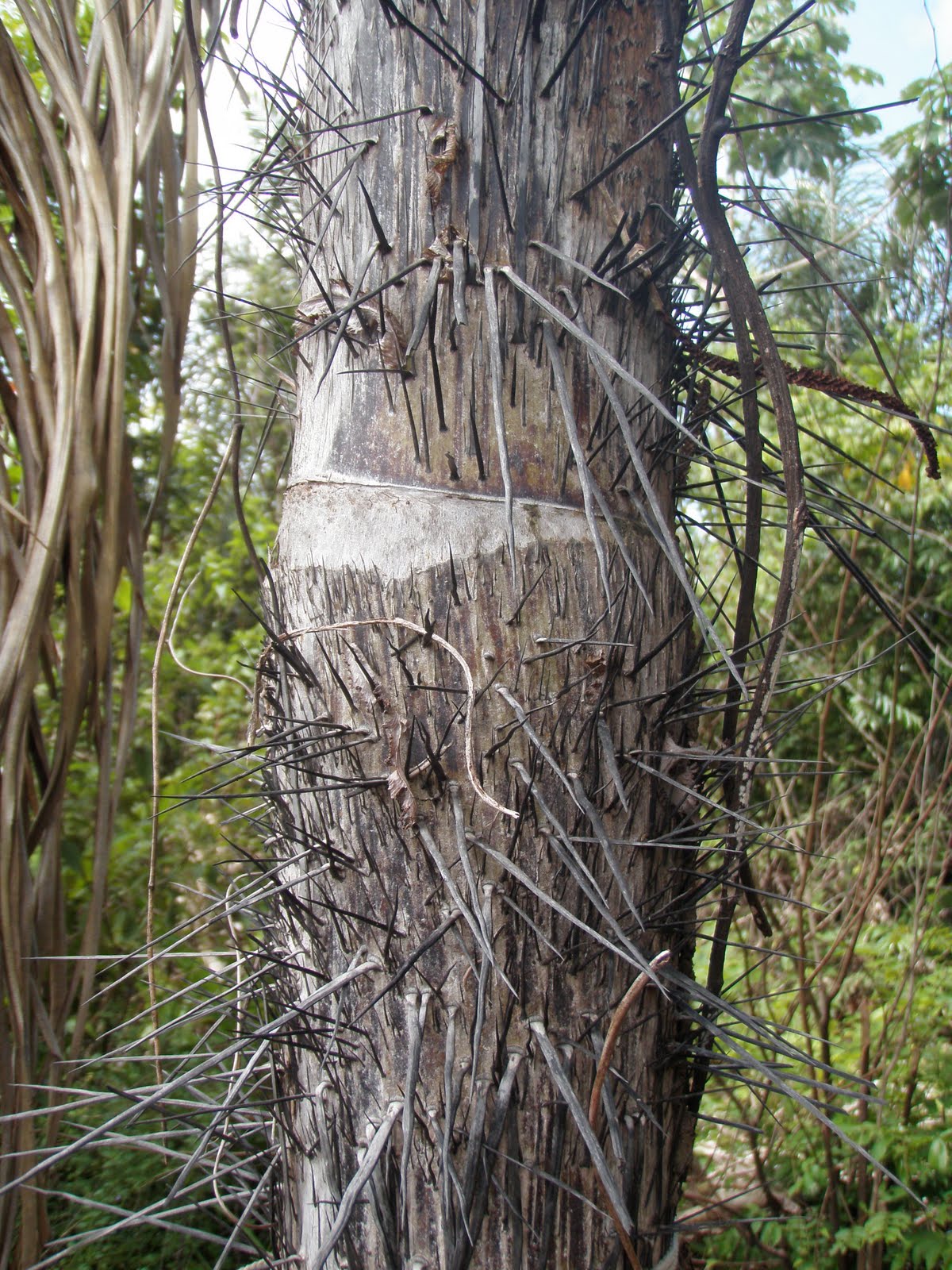
In our missionary training we learned of how sin manifests itself in (loosely) three different distinctive categories: guilt, shame and fear. Western cultures such as our own are guilt-based because we judge by law to determine right or wrong. In Aukaan culture fear pervades the lives of this people group and satan uses it to hold them in bondage to sin. Any time Aukaaners see me swimming in the river they are quick to warn me and admonish me to not go there. I have an answer ready but first ask them why I should be afraid. There is no good physical reason to fear swimming in the Tapanahoni, especially in the dry season with a languid current and an abundance of shallow places to take refuge if you become tired. None of the fish will attack humans so the only thing I am careful to take heed is sting-rays in the sand and the diabolical Makaa palms covered in thorns that occasionally lie just below the surface of the water. As of today, (October 17) I have yet to be stung by a sting ray nor have I gotten any sort of serious injury by a Makaa. All the praise to God for this.

Interesting enough, all the villagers who warned me about the river didn’t mention thorn palms or fresh water sting rays. They didn’t tell me I might drown because perhaps I’m not a good swimmer but they began to talk about spirits that pull you down under the water and drown you and all kinds of supernatural creatures and demons that seek out humans in the river. This might sound like myth and folklore that most in America would disregard as superstition. I’ve been here long enough to know the spiritual world and demonic oppression are so prevalent that I could never, as a believer deny that. So from there I begin from where I should’ve started anyway: The Lord. So I’ve told everyone who asks the question that I don’t know what’s under the water. I believe in evil spirits and perhaps there is something that can kill a person in the water but I believe in Jesus and I pray for God’s protection and the Holy Spirit that resides in all Christians keeps me safe not only in the river but everywhere I go. I put my trust in him to protect me and therefore I’m not afraid. This simple act of swimming in the river has had a great impact on villagers in Godoloho.

Taylor and I paddled in our canoe one night when I was down in Ditabikii for two weeks in October to another island in the dark and during a rainstorm. People were shocked and said, “They’re not afraid of anything”. We’ve taken every opportunity to give our Savior all the credit for this. That same week we spoke for an hour on the radio. Taylor interviewed me and I talked about swimming without fear and used the opportunity to share the Biblical account of Jesus and the demon- possessed man in Mark 5. Thousands heard this and I pray the Lord was and continues to be glorified in how we live our lives and that the manner in which we live them will be the biggest testimony of all.

Saa' Bea's testimony


A true joy since arriving and doing ministry in Godoloho has been hearing the testimonies from believers in the village. I wasn’t sure what to expect when I got here concerning how these folks came to know Jesus as Lord and Savior. I had no preconceived notions because I knew how different life was here and people’s proximity with the spiritual world was so acute. I was sure that the story of how they came to faith would not be a typical answer you here back home. But what I heard and continue to hear had me listening in awe, wonder and amazement and praising God.

Nearly every testimony was a prolific story that invariably involved the supernatural. There were miraculous healings, visions and dreams. As time passed by I realized this to be the norm. I couldn’t wait to hear another story. I’m going to tell the story of one woman in Godoloho named Saa’ Bea whose testimony involved a miraculous healing, a dream and a steadfast faith of Job-like proportions.

As I sat down under the refreshing shade of a mango tree during a typical mid-morning Godoloho day eating watermelon and enjoying a cool breeze that would soon be forgotten as the hot mid-day afternoon hours arrived Saa Bea told me the following story:

She had been a believer for a while but her husband not (very typical scenario here). She had contracted some type of debilitating illness that essentially left her paralyzed below the neck. She told she couldn’t even lift a spoon to feed herself at more severe stages of this illness. She was a complete invalid and was at the mercy of her family to take care of her. She prayed fervently everyday for healing from God. She put her trust in Christ and said never doubted he would heal her. The unbelievers in her family and fellow villagers saw her feeble condition and urged her to seek healing from a Bonuman who would use magic, oracles, and other various forms witchcraft to attempt to make her well. She rejected all offers and held fast to her faith as sole healer. As time passed and her condition failed to improve, she was persecuted with increasing intensity as she would not even give the traditional medicinal treatment of the Aukaan people. Her neighbors derided, ridiculed and continued heaped abuse on her. They even made threats on her life and tried to convince her husband to divorce her and thereby remove his financial provision and care. One of her daughters, Esma (a Christian) stuck with her through this great time of trial and suffering. She tended to her needs during these years.

Then one day she had a dream. In the dream she saw Jesus. She said his face was as bright as the sun and his clothes a brilliant white. He told her in this vision to take a particular plant and make a certain wash with water and bathe in it. As she could not raise herself to retrieve the plant needed to make what the Lord had asked her to make, she begged her husband to do it. He did as she asked and she washed in it for three days. On the third day, she rose up and walked. An absolute miracle! All people in the village were in awe and acknowledged God’s power and his mercy towards Bea. A story of this magnitude was too wonderful to not ask others in Godoloho and surrounding villages. I asked two men who are non-believers about her and they both corroborated the story: She was paralyzed and became well miraculously.

As I sat in awe-struck wonder I posed the question as to what was the response to all those who witnessed the power of your God and your steadfast faith in the face of unrelenting opposition. She calmly answered that they did not deny the Lord’s power but did not come to repent or accept the God who did what no one else did or could. My eyes began to well up with tears as I saw the awesome power of Jesus and at the same moment the hardened, stubborn, rebellious and unbelieving human heart. I was quickly brought back to the Gospels in which Jesus did miraculous signs and wonders demonstrating his divinity and power over and above the entire world and everything which plagues and hinders humanity: even death itself. Pray for the Holy Spirit to soften hearts in Godoloho and the interior or Suriname. He’s revealing himself to many and bringing to himself those whom he is pleased to bring.

I couldn’t help but see in Saa Bea’s story Jesus words in the Parable of the Rich man and Lazarus:

“No father Abraham,’ he said, but if someone from the dead goes to them, they will repent.’
He said to him, ‘if they do not listen to Moses and the Prophets, they will not be convinced even if someone rises from the dead.’” -Luke 15:30-31